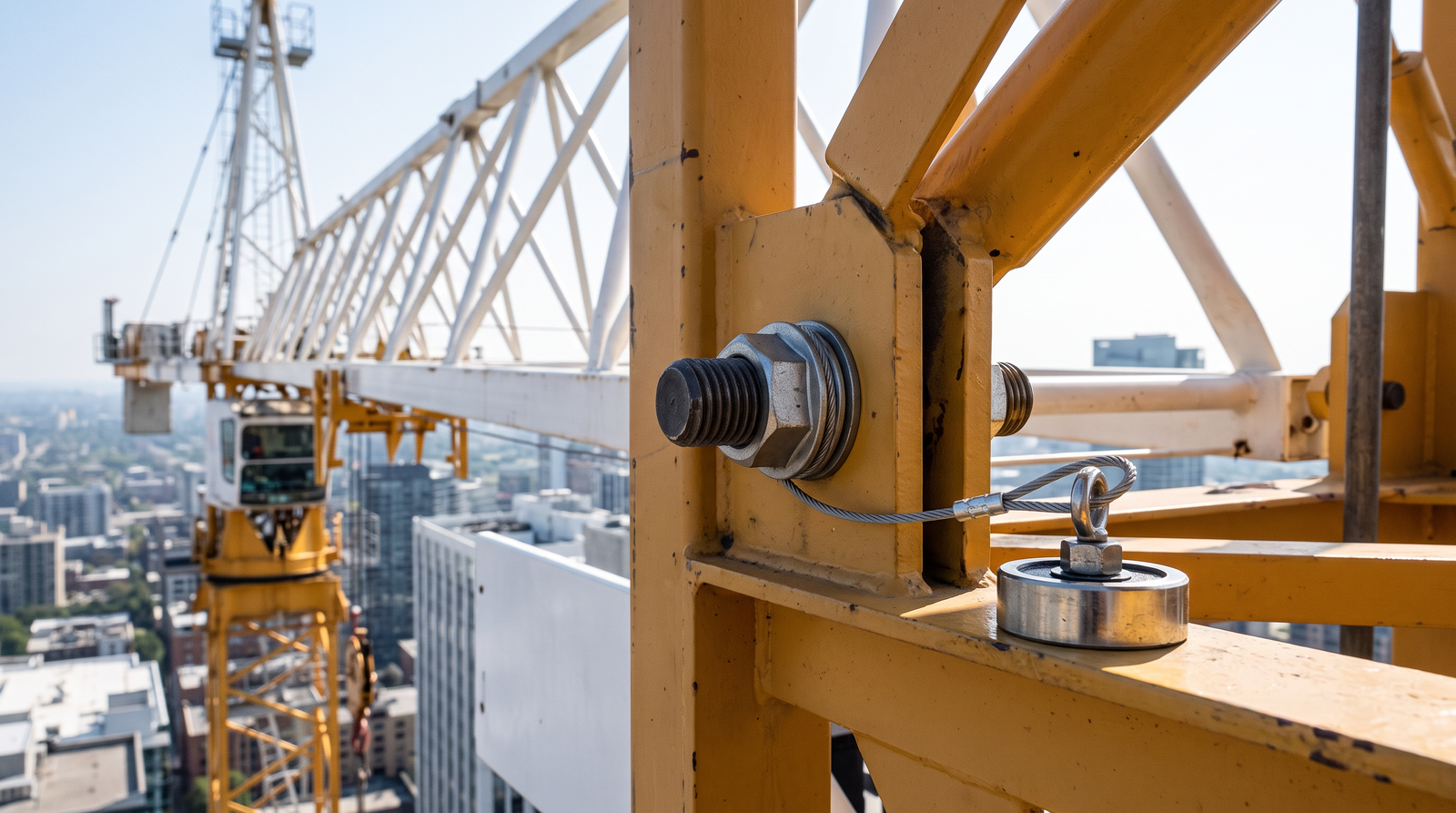
OSHA 1910.179 breaks overhead crane inspection into frequent (daily-to-monthly) and periodic (1-to-12-month) intervals, and most facilities run solid checklists for the load path. The gap, inspection after inspection, is fastener condition — which happens to be the finding most directly tied to dropped object incidents. Here's a working checklist with the hardware items built in. Adapt intervals to your crane class, duty cycle, and OEM manual.
Daily / pre-shift (operator)
- Hoist and travel controls, brakes, and limit switches function correctly
- Hook: no cracks, deformation, or missing/inoperative safety latch
- Wire rope or chain: no visible kinks, birdcaging, broken wires, or improper reeving
- No visible leaks, unusual noise, or vibration during test lift
- Look up: quick visual for hanging, protruding, or obviously loose hardware; anything shiny or freshly exposed where paint used to be
- Drop zone housekeeping: barricades in place, no one positioned under the load path
Frequent (weekly to monthly)
- Hoist brake adjustment and wear
- Rope/chain wear, stretch, and lubrication against removal criteria
- Sheaves and drums: grooving, wobble, guard condition
- Hardware pass: trolley and end-truck covers, bumper bolts, rail sweeps, festoon clamps and junction boxes, sheave and drum guards, and bolt-on fixtures (lights, horns, cameras, disconnects) — check for rotation against torque stripes
- Below-the-hook devices: pins, retainers, and fasteners tight and secured
Periodic (1–12 months, documented)
- Structural members: deformation, cracking, corrosion — including welds at fastener points
- Runway alignment, rail clips, and anchor hardware torque
- Brake system parts, drive train, electrical components per OEM spec
- Torque verification of critical structural and guard fasteners to spec — not “tight by feel”
- Review the loose-hardware log: any fastener found loose on consecutive inspections gets an engineering fix, not another re-torque
Three habits that make the hardware items work
Torque-stripe critical fasteners so rotation shows at a glance. Photograph baseline conditions so missing hardware is obvious against a reference. Log every loose or missing fastener as a near miss — the trend data is what justifies fixing the component instead of the symptom.
Close the between-inspections gap
Every checklist above is a snapshot; vibration works around the clock. For fasteners located over walkways, workstations, and traffic lanes, specify secondary retention — tethered or captive fasteners — so a bolt that backs out on day 40 of a 90-day interval hangs on its tether instead of falling. A hanging tether is also the fastest inspection aid there is: it finds the loose fastener before gravity does.
Safety Wire Bolts manufactures made-to-order tethered fasteners for crane and overhead applications — thread size, grade, finish, and tether rating built to your spec. Request a quote.